
The MoonSwatch Mission to the Moon 1969 showcases everything Swatch excels at, all packed into its boldest single release yet. It features a 42mm Bioceramic chronograph that includes 11 grams of 18k Omega MoonShine Gold in the dial, hands, crown, and pushers. It is priced at $570, even though the gold alone is worth roughly $1,064 based on today's market price. There are only 1,969 individually numbered pieces, and they are not available for purchase in stores. To get one, you need to apply through Swatch's Electronic Swatch Timepiece Application, also known as ESTA, which references the US immigration travel authorization form. You must answer 32 questions in 2 hours and 15 minutes, then hope that an internal jury selects you from the applicants. This MoonSwatch is the most collectible, the hardest to obtain, and the most genuinely valuable one ever made.
The application window runs from July 16 to July 21, 2026, at 23:59 CEST. This date marks the 57th anniversary of the Apollo 11 Moon landing. For more on the MoonSwatch family, check out our Swatch x Omega archive. Here is everything you need to know about the MoonSwatch Mission to the Moon 1969.

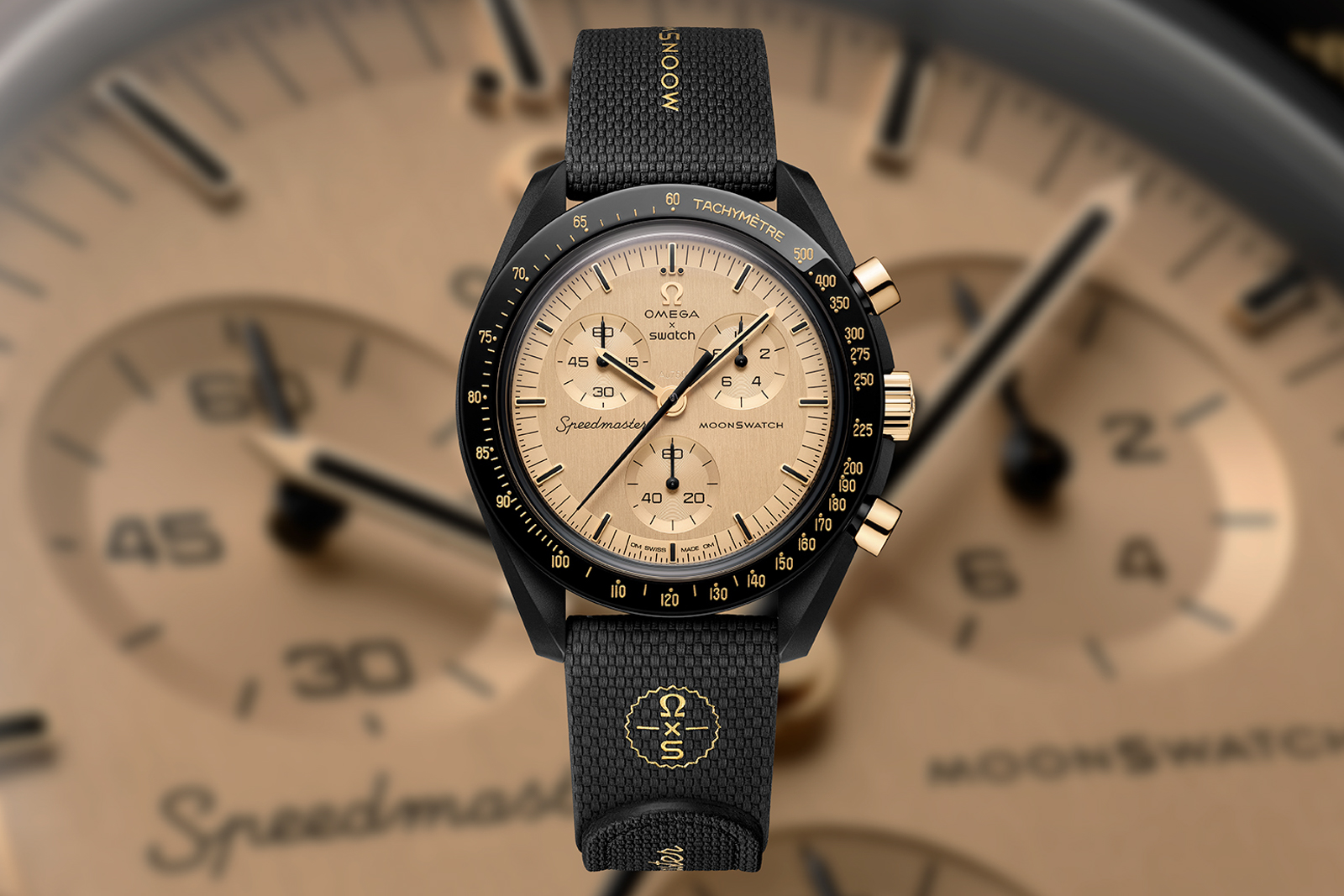
MoonSwatch Mission to the Moon 1969 — the first MoonSwatch to feature real 18k gold components. Image: © Swatch
What is the MoonSwatch Mission to the Moon 1969?
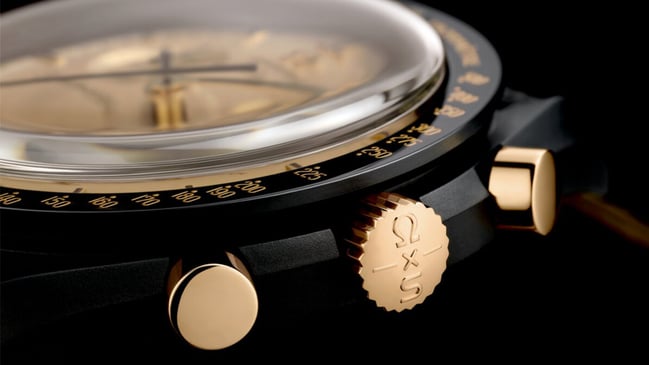
The MoonSwatch Mission to the Moon 1969 (ref. SSX01B700) is a limited-edition Bioceramic chronograph released by Swatch as part of its ongoing Swatch x Omega MoonSwatch collaboration. Unlike earlier MoonSwatch models that featured gold-colored finishes or Moonshine Gold only for accents such as the chronograph seconds hand, this edition uses real 18k gold for four components: the dial, the hands, the crown, and the pushers.
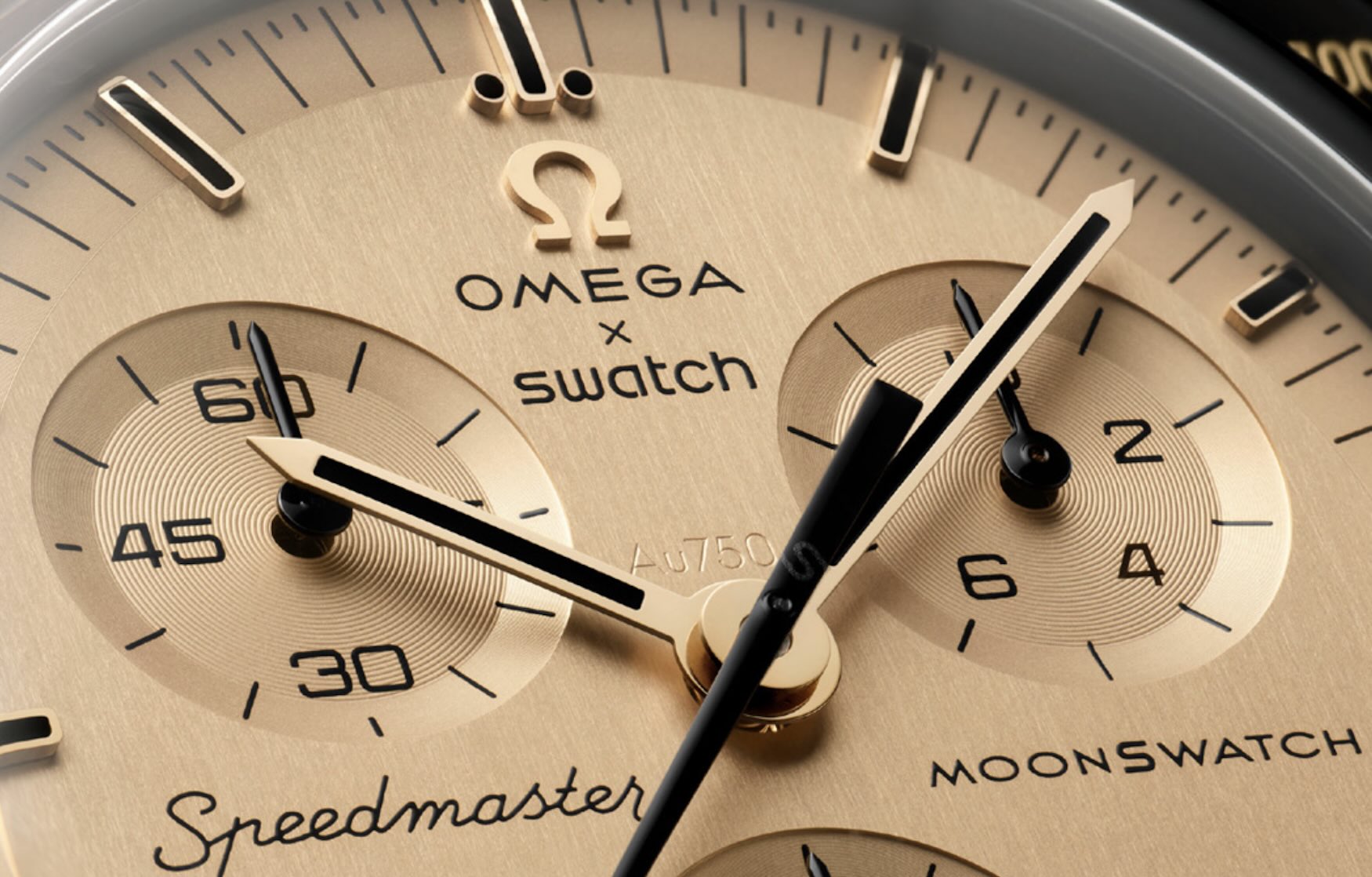
The design directly honors the solid gold Omega Speedmaster made in 1969 to celebrate the success of the Apollo 11 mission. Besides the historical "OM" designation at six o'clock, the dial also features the engraving "Au 750," indicating its solid gold construction. The case, strap, and basic structure are those of the standard MoonSwatch, including an asymmetric 42mm Bioceramic case, recessed chronograph sub-dials, and a tachymeter bezel. However, the gold dial significantly alters how the watch appears on the wrist.
The MoonSwatch Mission to the Moon 1969 is numbered from 1 to 1,969, with each number representing a unit in the edition.
The Gold Math: Why You’re Getting a Bargain
The number that has sparked most of the discussion around the MoonSwatch Mission to the Moon 1969 is not the $570 price. It’s the implied discount.
Few watches are truly worth their weight in gold, but for this individually numbered limited edition, Swatch has made the dial, crown, and pushers from MoonShine gold, totaling 11 grams. Today, gold is trading for just over US$4,000 per troy ounce. When converted to 18k, the 11 grams of gold in the Mission to the Moon 1969 is valued at approximately US$1,064, which is nearly double the US$570 retail price of the watch.
The reason Swatch set the price at $570 is both simple and romantic. This loss-leader strategy is based on the price of gold in 1969. At that time, gold was around US$41 per troy ounce, or about US$1 per gram. Multiply 11 grams by roughly $1, add the standard MoonSwatch base price, and you come to about $570. Swatch is essentially selling the MoonSwatch at what 11 grams of MoonShine gold would have cost in the year Neil Armstrong walked on the Moon.
Dial detail: the "Au 750" engraving confirming 18k gold, and the vertically satin-brushed MoonShine Gold finish. Image: © Swatch via WatchTime
Where Does the MoonShine Gold Come From?
Omega MoonShine Gold is a special 18k yellow-gold alloy made up of 75% gold, 14% silver, 1% palladium, and less than 9% copper. It provides a paler, slightly muted shade compared to regular 18k yellow gold, while also improving the color and shine's durability. Omega introduced this alloy in 2019 for the Speedmaster Professional Apollo 11 50th Anniversary.
The gold in the MoonSwatch Mission to the Moon 1969 is especially notable because of its origin. The Moonshine Gold comes from melted vintage Omega spare parts that were recast in-house. The gold in the watch is not newly mined or recently bought. It is recycled from Omega's own historical collection—metal that was originally produced during the era the watch honors. This detail makes the tribute more than just a visual reference.
The ESTA Application: A Watch Launch as an Admissions Test
The Application Window: Everything takes place online at swatch.com. It opens on July 16, 2026, at 15:32 CEST and closes on July 21, 2026, at 23:59 CEST. The Rules: Applicants must answer 32 questions that resemble the ESTA forms used for travel to the US. Once you start, you have exactly 2 hours and 15 minutes to finish.
This time limit is a thoughtful design choice. It reflects the approximate duration of the first lunar EVA when Neil Armstrong and Buzz Aldrin explored the Moon before returning to the Eagle lunar module. The questions cover Swatch and Omega brand history, facts about the Apollo missions and the Speedmaster, and "twist" questions aimed at testing genuine engagement instead of incentivizing guessing.
After the application period ends, the applications will first be sorted by those who answered the factual questions correctly. An internal panel will then review the answers of all correct applications and choose 1,969 applicants to receive approval, likely based on the quality of the open-ended responses.
Selected applicants will receive instructions via email. They then have 48 hours to complete payment online. Collection will later occur in person at the store chosen in the application, with photo ID and a copy of the approved ESTA.
The MoonSwatch Mission to the Moon 1969: black rubber strap with gold Swatch, Omega, and MoonSwatch logos. Image: © Swatch via SJX Watches
Why Swatch Changed the Launch Format
Every major MoonSwatch launch before this one led to uncomfortable situations for the brand. There were long overnight lines, people camping outside stores in several cities, confrontations, and some safety incidents. The Royal Pop collaboration with Audemars Piguet in May 2026, for instance, caused what Oracle Time called "multiple security issues" at retail locations.
The ESTA model tackles this problem head-on. Being near a Swatch store on launch day offers no advantage. Waking up early or knowing a sales associate doesn't help either. The real advantages come from having a working Swatch account, a solid understanding of the brand's history, the ability to express clearly why you want the watch, and the skill to fill out the form in the 2:15 window.
In a category where exclusivity has often favored physical effort and location over genuine engagement from collectors, this marks a real change. It remains to be seen if Swatch will keep this approach for future high-demand releases.
MoonSwatch Mission to the Moon 1969: Full Specs
Reference: SSX01B700
Case: 42mm, black Bioceramic (Swatch's bio-sourced ceramic blend)
Case height: same as standard MoonSwatch (c. 13.4mm)
Crystal: plexiglass
Gold components: dial, hands, crown, pushers; 18k Omega MoonShine Gold (Au 750)
Total gold content: 11 grams (from recycled vintage Omega spare parts)
Value of gold content: ~$1,064 at current spot price
Dial markings: "OM" at 6 o'clock, "Au 750" engraved, gold tachymeter scale, faceted gold indices
Movement: quartz chronograph (same calibre as standard MoonSwatch)
Functions: Central chronograph seconds, 30-minute counter at 3, small seconds at 6, 12-hour counter at 12, standard timekeeping (hours, minutes)
Strap: black rubber; Swatch, Omega, MoonSwatch logos printed in gold, gold lining
Clasp: same as standard MoonSwatch
Numbered: individually numbered 1 to 1,969
Limited edition: 1,969 pieces
Distribution: ESTA application only, no in-store walk-up purchase
Price: $570 / £520 / CHF 500 / €600 / AUD$900
Application open: July 16 to 21, 2026 (closes 23:59 CEST, July 21)
Application: swatch.com/en-us/mission-to-the-moon-1969-how-it-works.html
How to Apply for the MoonSwatch Mission to the Moon 1969
The application for the MoonSwatch Mission to the Moon 1969 is open from July 16 to July 21, 2026, at 23:59 CEST. That is 11:59 PM Central European Summer Time or 5:59 PM Eastern. Here’s the complete process:
1. Create or sign into your Swatch account at swatch.com.
2. Open the official ESTA page and select your preferred collection store.
3. Begin the 32-question application. You have exactly 2 hours and 15 minutes from the moment you start.
4. Answer all questions correctly. Incorrect answers will not be selected.
5. If chosen, you will receive a 48-hour window to pay online.
6. Collect your watch in person from the designated store with your approved ESTA and photo ID.
One important note: Apply only through Swatch's official website, not through any third-party form. Also, do not pay for the watch anywhere other than through the official payment link in the Swatch selection email.
Frequently Asked Questions
Q1. What is the MoonSwatch Mission to the Moon 1969?
A limited-edition Swatch x Omega MoonSwatch features 18k Omega MoonShine Gold on the dial, hands, crown, and pushers. There are only 1,969 individually numbered pieces, available only through the ESTA application. Price: $570.
Q2. How much gold is in the MoonSwatch Mission to the Moon 1969?
It contains 11 grams of 18k Omega MoonShine Gold (Au 750). At current gold prices, the gold content alone is worth about $1,064, which is nearly double the retail price of $570.
Q3. Why is the MoonSwatch Mission to the Moon 1969 priced at $570?
The $570 price comes from the gold market rate in 1969, when 11 grams of 18k gold cost around $11. Swatch set the watch price using that historical cost along with the standard MoonSwatch base, making the current price much lower than the gold value.
Q4. How do I apply for the MoonSwatch Mission to the Moon 1969 ESTA?
Go to swatch.com and open the official ESTA page. Create or log in to your Swatch account, choose a store, and complete 32 questions within 2 hours and 15 minutes. The application window closes on July 21, 2026, at 23:59 CEST.
Q5. Where does the MoonShine Gold in the MoonSwatch Mission to the Moon 1969 come from?
It comes from melted-down vintage Omega spare parts, which Omega recasts in-house. The gold has a historical connection to the same time period the watch honors.
Q6. Is the MoonSwatch Mission to the Moon 1969 available to buy in store?
No. It is only available through the ESTA application on swatch.com. There are no walk-ups, no queues, and no store purchases on the day.
The MoonSwatch Mission to the Moon 1969 on the wrist — the 42mm Bioceramic case feels lighter than steel. Image: © Swatch
The Bottom Line
The MoonSwatch Mission to the Moon 1969 is the most intriguing MoonSwatch since the original 2022 launch. In many ways, it is the most fascinating Swatch of any kind in years. The low gold pricing is a smart marketing strategy, tied to a genuine story about 1969 gold prices. The recycled Omega spare parts give the metal an authenticity that newly sourced gold lacks. The ESTA application, despite its novelty, is a thoughtful design. It rewards knowledge and engagement instead of just physical proximity and early-morning dedication. For a detailed look at the gold content math, check out SJX Watches' introductory article, which is the most thorough available. For the complete official ESTA process from Swatch, visit swatch.com. For more limited-edition watch coverage, see our limited edition watches guide and our quartz watch guide. For WatchTime's full breakdown of the ESTA process, their Swatch admissions article is a must-read.