
The Tissot PRX has never been short on variations. Since its return, the collection has grown from a straightforward integrated-bracelet sports watch into a broad family of sizes, movements, materials and complications. Now, Tissot is giving the PRX Chronograph a distinctly different personality.
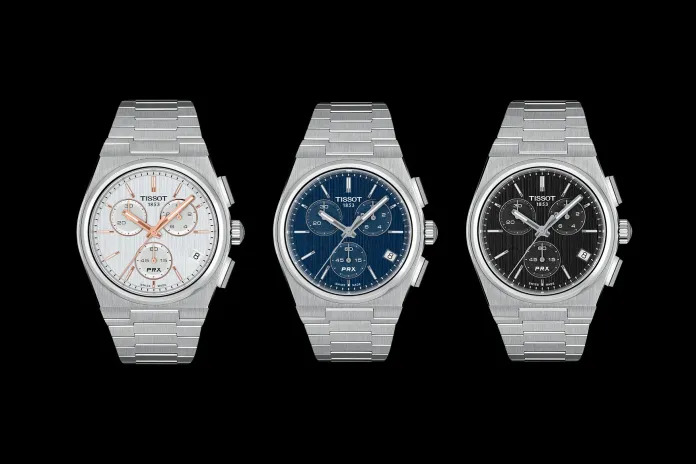
The new Tissot PRX Quartz Chronograph combines the familiar 1970s-inspired design with a quartz movement and three new dial colours: silver, black and blue. Rather than introducing another mechanical variation, Tissot has taken a more practical route - and given the watch plenty of visual variety while doing so.
The Biggest Change Is Beneath The Dial.
Unlike the existing PRX Chronograph, which uses an automatic movement, the new model is powered by quartz. It is a move that makes sense for the PRX, a collection that has long included quartz models alongside its mechanical offerings.
For a chronograph, quartz also brings a particularly straightforward proposition. There is no winding or power reserve to think about, while the movement provides the convenience and precision that have always been central to quartz watchmaking.
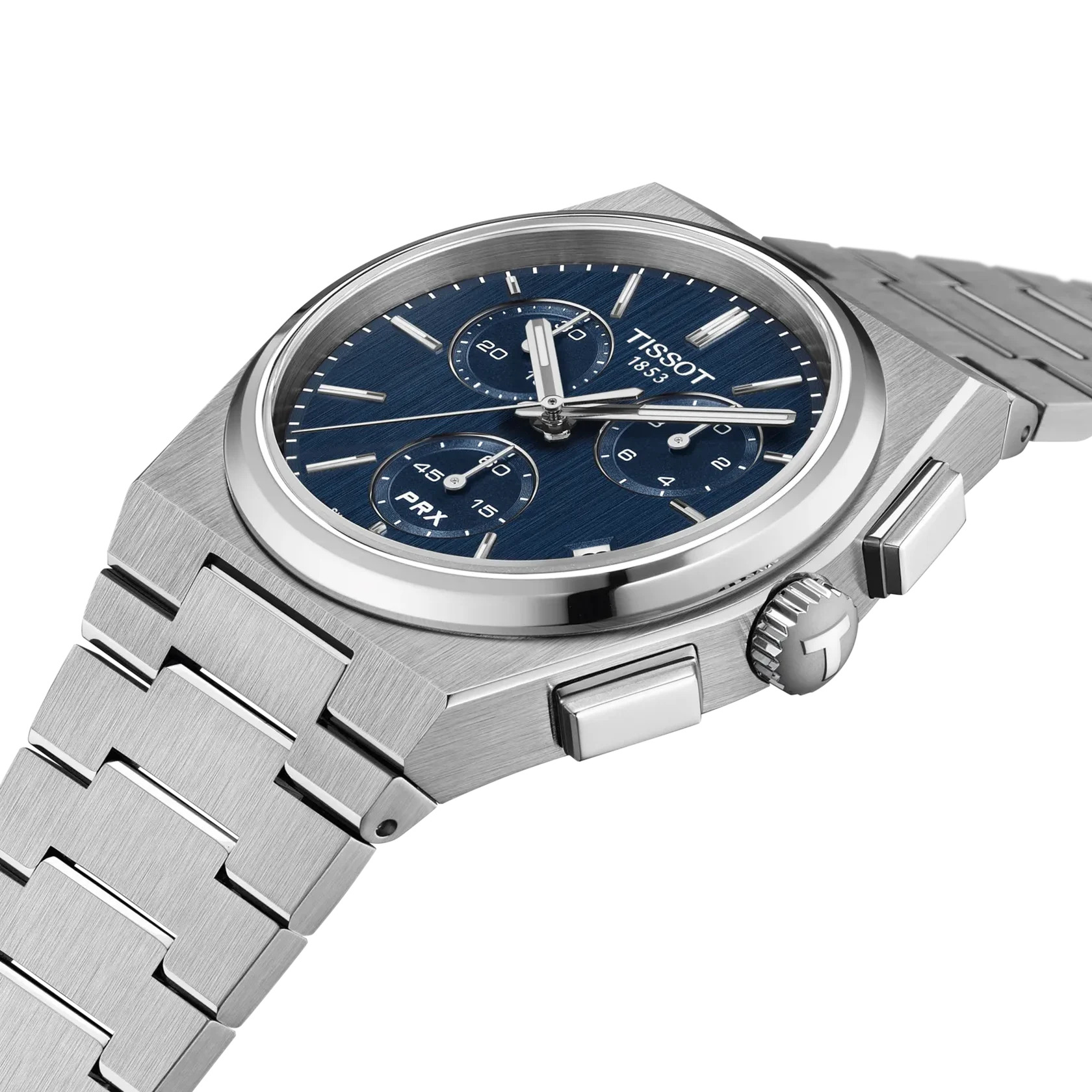
Tissot has also kept the case relatively restrained at 41mm. The stainless-steel case retains the angular profile and integrated-bracelet architecture that define the modern PRX, while the chronograph layout gives the dial a busier, sportier appearance.
In other words, the movement may have changed, but the PRX identity has not.
Three Colours Change The Personality
If quartz is the functional story behind the new PRX Chronograph, colour is arguably the more immediate visual one. Tissot is launching the watch in silver, black and blue, with each dial giving the same basic design a noticeably different character.
The silver dial takes the dressier route. Rose-gold-coloured hands and indices introduce some warmth against the lighter dial, giving this version a slightly more polished appearance.
The black dial goes in the opposite direction. With nickel-coloured hands and indices, it has a more restrained, monochromatic look that lets the chronograph counters and case architecture do most of the visual work.
Then there is blue, perhaps the most familiar colour for the PRX. The dial features vertical brushing that gives the surface some depth as it catches the light, while keeping the watch firmly within the aesthetic territory that has become synonymous with the collection.
It is a relatively simple strategy, but an effective one. The three colours don't attempt to reinvent the PRX; they simply give different personalities to the same design.
Beyond the movement and colours, the specifications remain recognisably PRX. The watch measures 41mm, features a stainless-steel case and integrated bracelet, and uses sapphire crystal. There is also a date display between 4 and 5 o'clock, along with Super-LumiNova on the hands and indices.
The bracelet comes with a quick-release system, adding some everyday practicality to the otherwise retro-inspired design.
But the most interesting thing about this release isn't any individual specification. It is the combination of quartz and colour.
The automatic PRX Chronograph already caters to enthusiasts who want a mechanical movement inside the familiar integrated-bracelet format. The quartz version approaches the same idea from another direction: simpler ownership, a different movement philosophy and more choice when it comes to the dial.
The New Tissot PRX Quartz Chronograph Is Priced At £430.
With its quartz movement and three dial options, the latest PRX Chronograph feels less like an attempt to replace its mechanical counterpart and more like an expansion of the formula. The design remains familiar, but the movement makes it more straightforward while the new colours allow it to take on a different personality.
For a collection built around a distinctly vintage design, that is perhaps the most modern thing about it: the PRX keeps changing without losing the visual identity that made it popular in the first place.