
Walk past a Buccellati window and the first thing you notice is what is missing. There is no wall of giant diamonds, no single headline stone doing all the talking. Instead there is gold that looks like it has been woven, pierced and embroidered, jewellery that resembles lace and silk far more than it resembles metal. It is beautiful in a quiet, almost understated way. Then you see the price, and quiet very clearly does not mean cheap. So why is Buccellati so expensive? The short answer is that you are paying for the metal and the hands that worked it, not for the rock in the middle.
A poor boy, a burin, and a century of goldsmithing
The story starts with Mario Buccellati, a boy from the countryside outside Milan who began apprenticing at the goldsmith Beltrami & Beltrami in 1903, aged twelve. By 1919 he had taken over the workshop and put his own name above the door. His reputation grew almost immediately, and not always for subtle reasons. At a 1920 exhibition in Madrid, a woman asked him for a discount and he reportedly hurled the compact out of the window, shouting that he was not a tradesman. The stunt worked. Crowds turned up the next day, everything sold, and the Spanish royal family became lifelong clients.
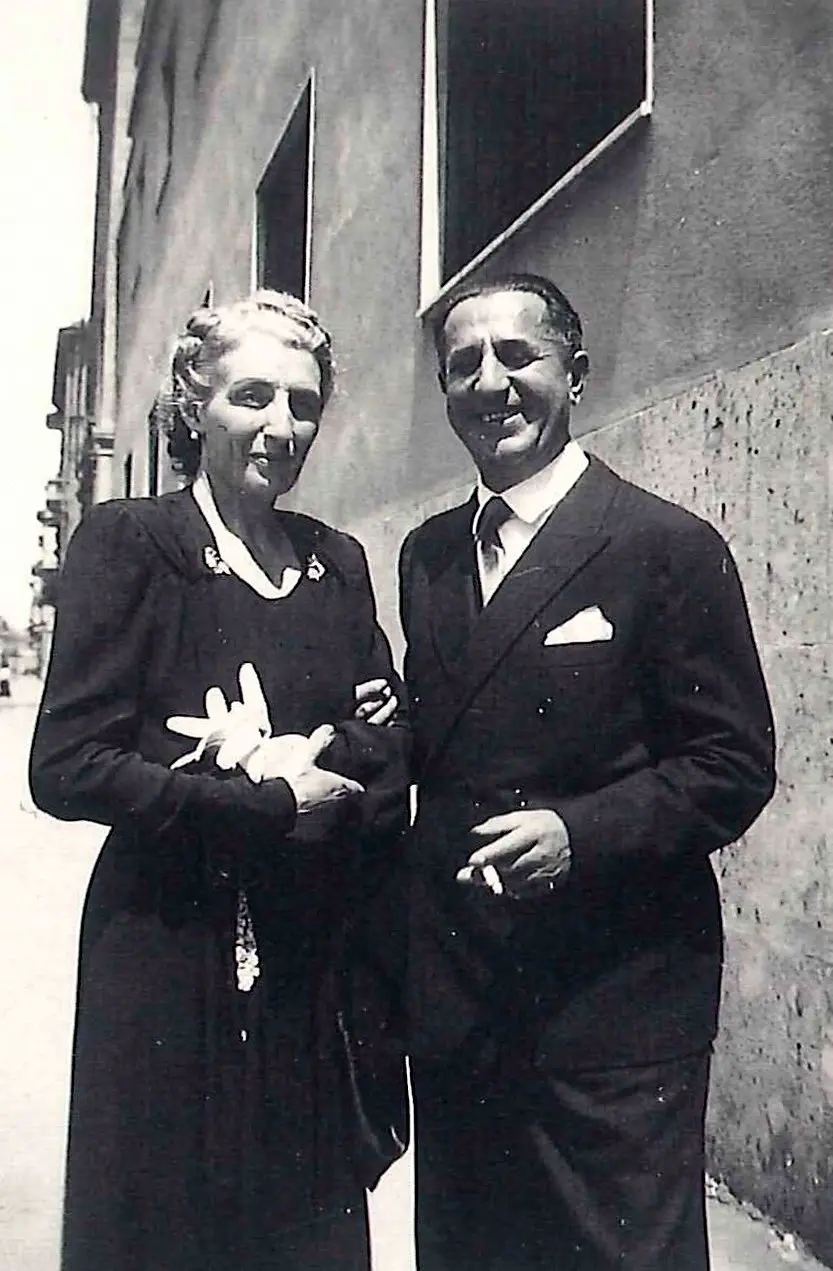
Mario Buccellati, the "Prince of Goldsmiths," who revived a set of Renaissance engraving techniques and built a house around them.
The poet Gabriele d'Annunzio went on to call him "the Prince of Goldsmiths," a nickname that stuck. Stores followed in Rome in 1925 and Florence in 1929, and in 1951 Buccellati became the first Italian jeweller to open on Fifth Avenue in New York. His son Gianmaria later took the house global and created the Macri collection, named for his daughter Maria Cristina. Since 2019 the maison has been part of Richemont, the group that also owns Cartier and Van Cleef & Arpels. Through every one of those chapters, the actual method of making the jewellery barely changed.
Gold made to look like cloth
What separates Buccellati from almost everyone else is engraving. The house revived a set of Renaissance goldsmithing techniques and never let them go, and they are the reason a plain-looking gold cuff can cost as much as a stone-set one. There are five engravings that collectors learn to recognise. Rigato is the most famous: fine parallel lines cut by hand with a burin, giving the gold a soft, silky sheen. Telato crosses those lines at right angles for a texture like linen or canvas. Segrinato runs them in every direction at once, producing a velvety surface that Gianmaria used to recreate the petals of peonies and anemones. Ornato layers floral and brocade patterns over a rigato background for a three-dimensional effect. Modellato, the hardest of all, sculpts the metal into tiny high-relief shapes, usually along the edges of a piece.
Then there is the technique that made Mario famous in the first place: tulle, also called honeycombing. Inspired by the delicate Venetian lace of Burano, it involves piercing a sheet of gold by hand into a mesh of tiny polygonal holes, with each cell sawn and reworked at least five times to get it perfectly regular. The result looks like fabric and weighs almost nothing. Put all of this together and you get the clever part of the Buccellati trick: the engraved gold catches light so well that the metal itself sparkles, so a piece can read as dazzling without a single diamond in it. As the family likes to say, you will not find a millimetre of plain gold in their work.
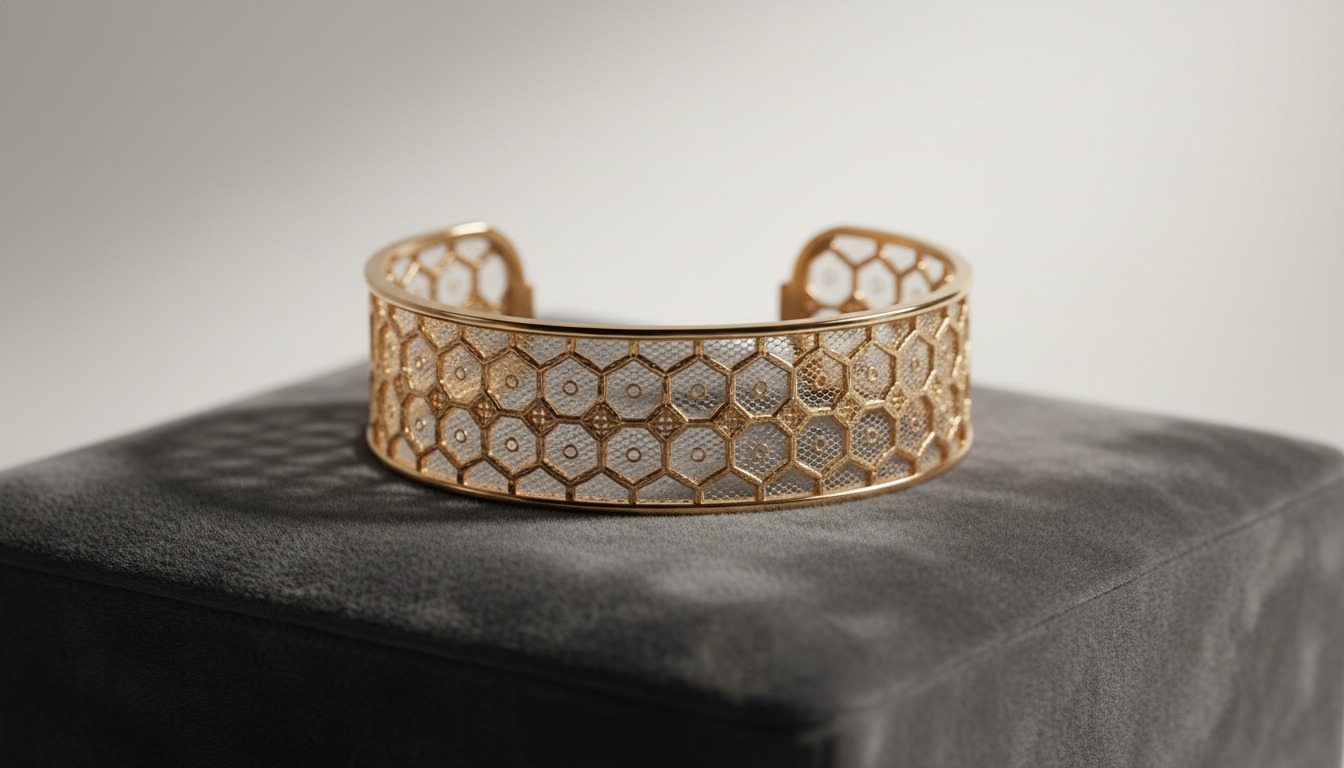
Buccellati's signature tulle: gold pierced by hand into a lace-like mesh, each cell sawn several times over.
So why is Buccellati so expensive?
Here is the honest answer. There are no machines. The family is blunt about it: every piece is made with, in their words, the head, the hand and the heart, and nothing else. Every surface you see has been engraved, pierced or modelled by a person holding a burin, which means the cost is mostly time and skill rather than materials.
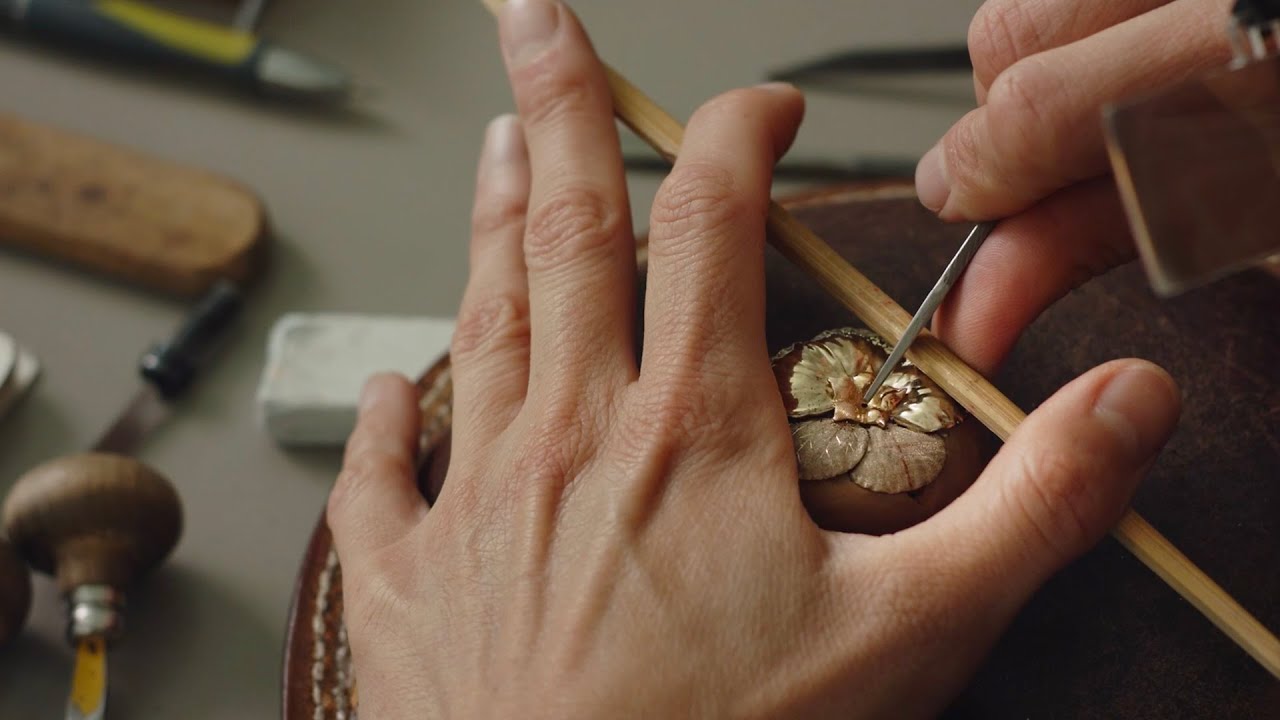
Every surface is worked by hand. A craftsman engraves the metal with a burin, the same tool Renaissance goldsmiths used.
And the skill is rare. A Buccellati engraver takes roughly seven to ten years to train to the point where they can work unsupervised, and even then each craftsman tends to specialise. A single important piece can absorb hundreds of hours, and the tulle work alone means sawing every tiny cell by hand, several times over. So few people in the world can do this that the house runs genuine waiting lists, and it recently opened its own Renaissance Academy in Milan to train the next generation of engravers because it simply cannot find enough of them.
That is what you are paying for. Not the carat weight of a centre stone, but the labour, the decade of training behind the hands, and the fact that the value lives in the craftsmanship. It is a different proposition from most high jewellery, where the stone is the asset and the setting is the supporting act. With Buccellati, the metalwork is the asset.
The India angle
This is also why Buccellati deserves more attention from Indian collectors than it usually gets. India understands gold better than almost any market on earth, and the country's own traditions, from kundan and jadau to fine filigree, are built on exactly this idea that handworked metal can be the whole point of a piece rather than a frame for a diamond. Buccellati's stone-light, engraving-first aesthetic should feel instantly familiar to anyone raised around that craftsmanship.
The catch is access. Buccellati has very little physical retail presence in India, so Indian buyers typically encounter it abroad, in London, Dubai or Milan, or through Richemont's wider network. For a collector who already owns the obvious diamond-set names, a Buccellati cuff is the connoisseur's move: quieter, rarer, and far harder to replicate. It is the kind of piece that other people in the room may not clock at all, while the one person who knows exactly what it is will not be able to look away.
So, why is Buccellati so expensive? Because you are buying a century-old craft that runs on time, patience and a skill almost nobody still has. The gold just happens to be the easy part.
Sources: Buccellati, Sotheby's, Apollo Magazine, Day & Night Magazine.